
Ever wondered what’s the story with all these different types of Hair Conditioner on the shelves in supermarkets or the drugstore? The products have similar descriptions, similar ingredients, and massive difference in price? Do I choose moisturizing products, sprays, de-tanglers, protein nourishes, cream rinses, masks…
What do I choose??
Well…let’s have a closer look!
The generic conditioners are generally applied after they have done their softening and de-tangling job. This type of conditioner is sometimes also already mixed in the shampoo, which is practical but less effective. Conditioners work best after they had the time to impregnate the hair for a few minutes. They work mainly on the outer layer of the hair, and protect the hair for damage by external influences.. They are available for dry, normal and oily hare and mainly differ in the amount of oil they leave behind when rinsed out to adjust for your hair type.
There is usually more then enough choice:
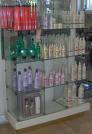
Deep treatment Conditioners
As the title says, their formula is targeted to penetrate deeply into the hair. For that reason the impregnation time will be longer, and sometimes it is advised to wrap the hair to make the treatment more effective. These formulas often contain ingredients to supplement protein and moisture in the hair. Moisturizing masks and protein treatments are equally members of this product group. Moisture Rich versions of these deep treatment conditioners are especially suited for chronically dry hair because the ingredients ‘seal’ the scales and prohibit that the added moisture cannot exit the hair. Do not use these more than once a week of fortnight as then they can seal the hair and nourishment cannot penetrate the hair after wards.
Protein treatments are particularly suited to precede a wet hair styling with curlers to give longer lasting results.
Specific treatments for hair are available, for very specific challenges. Always check with the vendor or hair specialist if you have any doubt or fear adverse effects, or do a test on a concealed lock. If you have very dry hair, then a deep penetrating hair conditioner can restore the softness of the hair and the moisture balance. Is your hair fragile and weak, then a high dose or protein conditioner can repair, strengthening and revitalize the damaged hair.
Hair Conditioners that do not have to be rinsed out of the hair are precisely designed – to be implemented and not be rinsed. They are usually mild and moisture-rich and designed to combat dehydration and to avoid tangling. These hair conditioners are designed to be applied to the hair after washing and are found in spray formulations or cream application..
A cheap way to condition your hair is explained in this video:
Don’t forget that hair conditioner treatments are always designed to add something to the hair and scalp. There are also lotions to remove the excess oils from the scalp to keep the natural oils in hair balanced.
More and more people start to appreciate natural hair care, there are many options there too.
Just remember that everyone is unique, and the only way to find out what works for you is by trial and error.